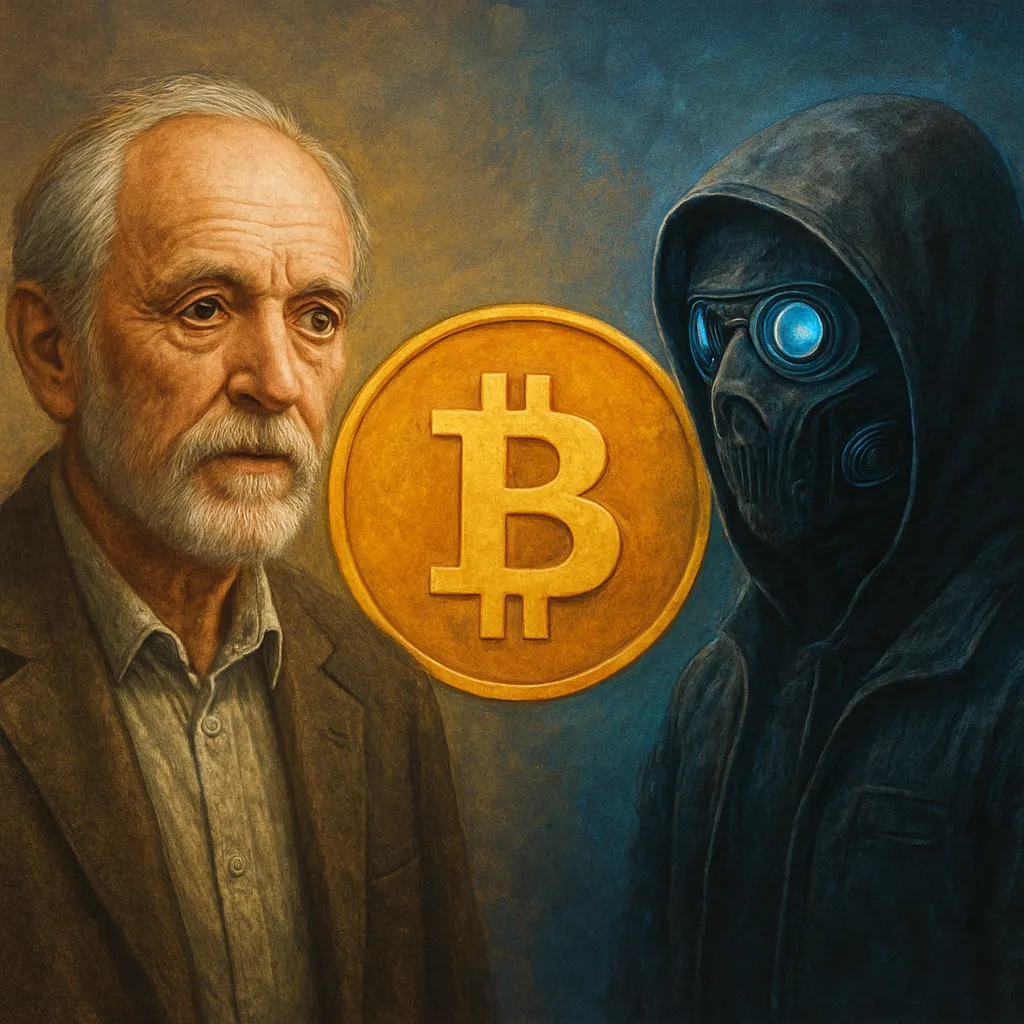
The philosophy of decentralization emerges from a desire to redistribute power away from singular entities and towards a more distributed, resilient system. Grounded in centuries of political thought and amplified by modern technological advancements, this concept underpins the rise of cryptocurrency as both an economic tool and a social movement. By examining the core principles, applications, and future trajectories of decentralized networks, one can appreciate why this transformation resonates more deeply now than ever before.
Philosophical Foundations of Decentralization
From Central Authority to Distributed Networks
Historically, societies have relied on centralized institutions—governments, banks, religious organizations—to enforce rules, issue currency, and resolve disputes. Yet critics argued that concentrating power often led to corruption, inefficiency, and disenfranchisement. The idea of decentralization counters this by dispersing control among many participants, creating a system that is inherently more resilient to single points of failure.
Political philosophers such as John Locke and Jean-Jacques Rousseau debated the balance between individual liberty and societal order. In modern times, these debates find new expression in digital form. The promise of peer-to-peer networks challenges the assumption that trust must always be mediated by an overseer. Instead, transparency and cryptographic proofs serve as the bedrock of a trustlessness paradigm, where transactions can be verified without relying on third parties.
Key Principles Underlying Decentralized Systems
- Transparency: Public ledgers allow anyone to audit the flow of funds and data.
- Immutability: Once recorded, transactions become nearly impossible to alter, ensuring historical accuracy.
- Security: Distributed consensus mechanisms, such as proof-of-work or proof-of-stake, protect the system from malicious actors.
- Autonomy: Users maintain control over their assets, reducing reliance on custodial services.
- Innovation: Open-source protocols foster rapid experimentation and collaboration across geographies.
Cryptocurrency as the Vanguard of Decentralized Finance
The Role of Blockchain Technology
At the heart of cryptocurrency lies the blockchain, a continuously growing chain of cryptographically linked blocks. Each block contains a batch of transactions, timestamped and appended in a way that prevents tampering. This structure not only underpins digital currencies like Bitcoin and Ethereum but also extends to decentralized applications (dApps) and smart contracts.
Because blockchains are maintained by a network of nodes rather than a single controlling entity, they embody true peer-to-peer interactions. Participants can send and receive tokens, execute contracts, and share data without intermediaries imposing fees or delays. As a result, users experience faster settlement times and greater financial inclusion, especially in regions underserved by traditional banking systems.
Decentralized Finance (DeFi) and Beyond
Decentralized Finance—or DeFi—represents a growing ecosystem of protocols that replicate and enhance traditional financial services. Lending platforms, decentralized exchanges, yield farming, and synthetic asset issuance all happen through smart contracts that run autonomously when predefined conditions are met. This ecosystem showcases how governance can be encoded directly into software, enabling community-driven upgrades and risk parameters without requiring top-down approval.
Key advantages of DeFi include:
- No single point of control or failure
- Programmable money enabling composable financial products
- Open access—users only need an internet connection and a compatible wallet
- Reduced counterparty risk through collateralization and over-collateralization
Despite these benefits, DeFi also faces hurdles such as smart contract vulnerabilities, regulatory uncertainty, and liquidity fragmentation. Yet each challenge spurs further innovation, driving developers to refine protocols and integrate solutions like formal verification and cross-chain bridges.
Challenges, Governance, and the Path Forward
Scalability and Environmental Concerns
As decentralized networks grow, they must address performance and sustainability. Early consensus mechanisms like Bitcoin’s proof-of-work secured the network but consumed vast computational resources. Newer models such as proof-of-stake and sharding aim to maintain robust security while reducing energy expenditure. Balancing decentralization, security, and scalability remains a dynamic tension often referred to as the “Blockchain Trilemma.”
Solutions under exploration include layer-two networks, rollups, and off-chain computation, each designed to ease congestion on main chains without sacrificing the core tenets of immutability and censorship-resistance.
Governance Models and Community Dynamics
Decentralized systems must define how decisions are made when protocol changes or emergency patches are required. On-chain governance assigns voting power to token holders, while off-chain approaches rely on discussion forums and signaling mechanisms. Each model has trade-offs:
- On-chain voting can be transparent but risks plutocracy if large holders dominate decisions.
- Off-chain discussions foster community debate but may lack enforceability.
Hybrid frameworks attempt to blend the best of both worlds, ensuring proposals receive adequate scrutiny while granting developers the agility to respond to critical threats. Effective governance mechanisms are critical to upholding the security and longevity of decentralized networks.
Privacy, Regulation, and Inclusivity
Privacy remains a double-edged sword. While pseudonymity empowers users in oppressive environments, it can also enable illicit activities. Technologies like zero-knowledge proofs and confidential transactions aim to offer selective disclosure, striking a balance between individual privacy and compliance needs.
Regulators worldwide grapple with how to classify and oversee cryptocurrency. Clear frameworks can foster wider adoption, yet overly restrictive regulations risk stifling the decentralization ethos. Stakeholders advocate for principles-based approaches, emphasizing consumer protection and anti-money laundering safeguards without hampering autonomy and free innovation.
The Socio-Economic Impact of Decentralization
Decentralized networks hold the potential to transform industries beyond finance. Supply chain management, digital identity, voting systems, and decentralized storage all benefit from trustless architectures. By removing intermediaries, participants can transact more efficiently, reduce costs, and enhance transparency.
Furthermore, decentralized models can empower marginalized communities by granting them direct access to global markets and financial services. Microtransactions, programmable royalties, and token-based incentives open new avenues for creative economies, gig workers, and grassroots funding initiatives.
Conclusion of Core Insights
Decentralization is more than a technical paradigm; it represents a philosophical shift towards distributed authority, collective responsibility, and open innovation. Cryptocurrency, as the most visible application, demonstrates how blockchain networks can deliver transparency, resilience, and financial sovereignty on a global scale. While challenges remain—ranging from scalability and governance to regulatory clarity—the ongoing evolution of protocols and community-led experimentation suggests a promising future. By embracing these principles, we move closer to systems that truly reflect the diverse needs and aspirations of participants worldwide.