The cryptocurrency revolution has transcended mere digital currency exchanges, paving the way for a new era of digital collectibles known as NFTs. These tokens have captured global attention by combining cutting-edge blockchain technology with the art world, creating unprecedented opportunities for digital ownership and creative expression. Amidst the excitement, certain NFT sales have shattered price records and redefined the boundaries of value in the crypto ecosystem.
Blockchain Foundations and the Emergence of NFTs
The concept of a blockchain—a decentralized, immutable ledger—was first introduced by Satoshi Nakamoto in the Bitcoin whitepaper. While Bitcoin excelled at peer-to-peer transfers of value, the Ethereum network expanded the horizon further by adding programmable smart contracts. These contracts enabled developers to create unique, non-interchangeable digital tokens—hence, Non-Fungible Tokens. Unlike fungible coins such as Bitcoin or Ether, each NFT carries its own distinct properties and metadata, ensuring irreplicable authenticity and scarcity.
Key technical aspects that underpin the NFT phenomenon include:
- ERC-721 and ERC-1155 token standards on Ethereum
- Interoperability between different crypto wallets and marketplaces
- Metadata hosting via decentralized storage like IPFS
- Royalties enforced by smart contracts ensuring creators earn on secondary sales
Why NFTs Became So Valuable
The surge in demand for NFTs stems from the convergence of art, gaming, and finance. By representing rare digital artifacts—be it pixelated avatars, virtual land, or algorithmic art—collectors and speculators have found new ways to allocate capital. Furthermore, NFTs unlock the Metaverse, a shared virtual reality where ownership of digital real estate and items has tangible economic impact.
Landmark Sales That Redefined Digital Rarity
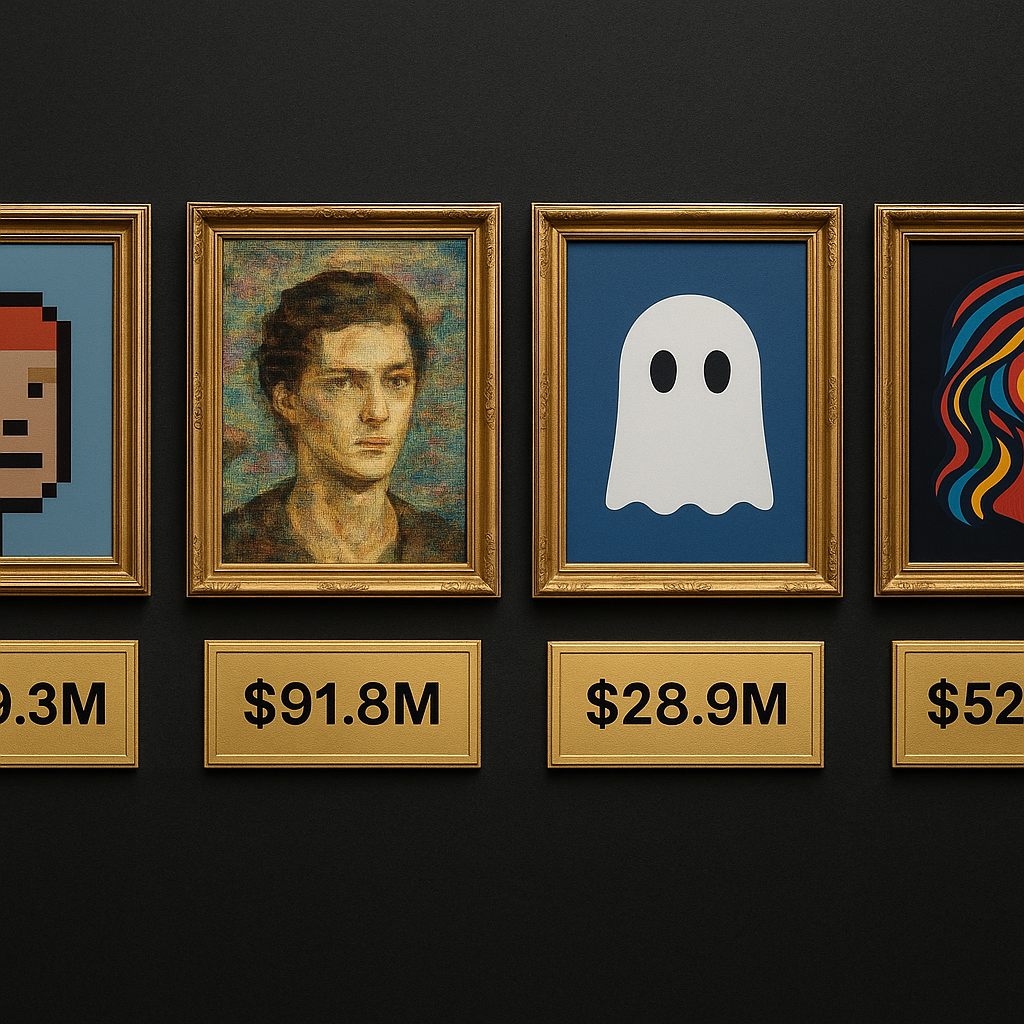
Since the early 2021 boom, several NFT transactions have captured headlines by reaching jaw-dropping figures. These record-breaking sales illustrate the market’s appetite for unique digital assets and the willingness of collectors to pay premium prices for cultural significance and exclusivity.
- Everydays – The First 5000 Days by Beeple (Sold for $69.3 million)
- The Merge by Pak (Sold in aggregate for $91.8 million)
- Clock by XCOPY (Sold for $52.7 million worth of $APE tokens)
- Human One by Beeple (Sold for $28.9 million)
- CROSSROAD by Beeple (Sold for $6.6 million)
Everydays – The First 5000 Days
When the Beeple NFT fetched an astounding $69.3 million at a Christie’s auction, it marked a pivotal moment, bridging traditional art houses with the blockchain realm. The piece, a collage of daily digital artworks created over more than a decade, highlighted the provenance and traceability inherent to intellectual property on-chain.
The Merge by Pak
Rather than a single token, Pak’s innovative sale used “mass units” that aggregated into one colossal NFT. Investors purchased these units, ultimately combining them into a collectible of staggering value. This creative distribution underlined the flexibility of NFT mechanics and the growing sophistication of digital asset design.
Clock by XCOPY
XCOPY’s “Clock” introduced a dynamic element: a countdown timer that continuously updated on-chain. Purchased with ApeCoin, the NFT demonstrated the synergy between different crypto tokens and the possibility of using alternative tokens for high-stakes auctions.
The Future Trajectory of NFTs within the Crypto Ecosystem
As NFTs evolve, they are poised to disrupt multiple industries beyond art—namely gaming, music, real estate, and identity verification. We are already witnessing:
- Wearables and interactive skins in blockchain-based games
- Tokenized ticketing systems for concerts and events
- Fractional ownership enabling micro-investments in high-value assets
- On-chain reputation scores linked to decentralized identifiers (DIDs)
Integration with DeFi and Beyond
The interplay between NFTs and decentralized finance (DeFi) introduces lending protocols where holders can collateralize NFTs for loans. Innovative platforms also offer yield-generating vaults that accept rare tokens as deposit. Such financial instruments are expanding the use cases of NFTs far beyond simple collectibles.
Sustainability and Scalability Challenges
Despite the hype, environmental concerns over energy-intensive proof-of-work blockchains have spurred migrations to proof-of-stake networks like Ethereum 2.0 and Layer 2 rollups. These upgrades promise greener transactions and lower fees, addressing two critical barriers to mainstream adoption. Scalability solutions such as sidechains and sharding will further facilitate high-volume NFT minting and trading without network congestion.
The Social and Cultural Impact
NFTs are redefining how creators engage with audiences, shifting power away from intermediaries. Musicians can launch token-gated albums, storytellers can embed collectible chapters in their narratives, and activists can crowdfund causes through limited-edition digital art. The result is a more equitable distribution of value, as each token intrinsically carries creator royalties and transparent ownership history.
Ultimately, the explosive valuations of landmark NFT sales underscore a broader transformation: the merging of finance, art, and technology. As blockchain infrastructure matures and adoption scales, the next generation of NFTs will further blur the lines between physical and digital realms, unlocking novel economies in a borderless, peer-to-peer world.